

Department of Mathematics and Systems Analysis
-
Research
- Algebra and discrete mathematics
- Analysis
- Mathematical Physics
- Mathematical Statistics and Data Science
- Numerical analysis
- Systems and operations research
- Studies
- Personnel
- Current
- Contact information
- Internal pages
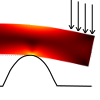 Mechanics research is focused on finite element methods. Finite element methods are developed and analyzed, as well as used in research of mechanical problems.
 Inverse problems constitute an active and expanding research field of mathematics and its applications. A forward problem is to deduce consequences of a cause, while an inverse problem is to find the causes of a known consequence.
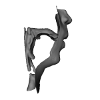 Our interests lie within mathematical modelling and MRI data acquisition of human speech, motivated by future applications in oral and maxillofacial surgery. We carry out related research in speech science as well as in applied mathematics, numerical analysis, and mathematical systems theory.